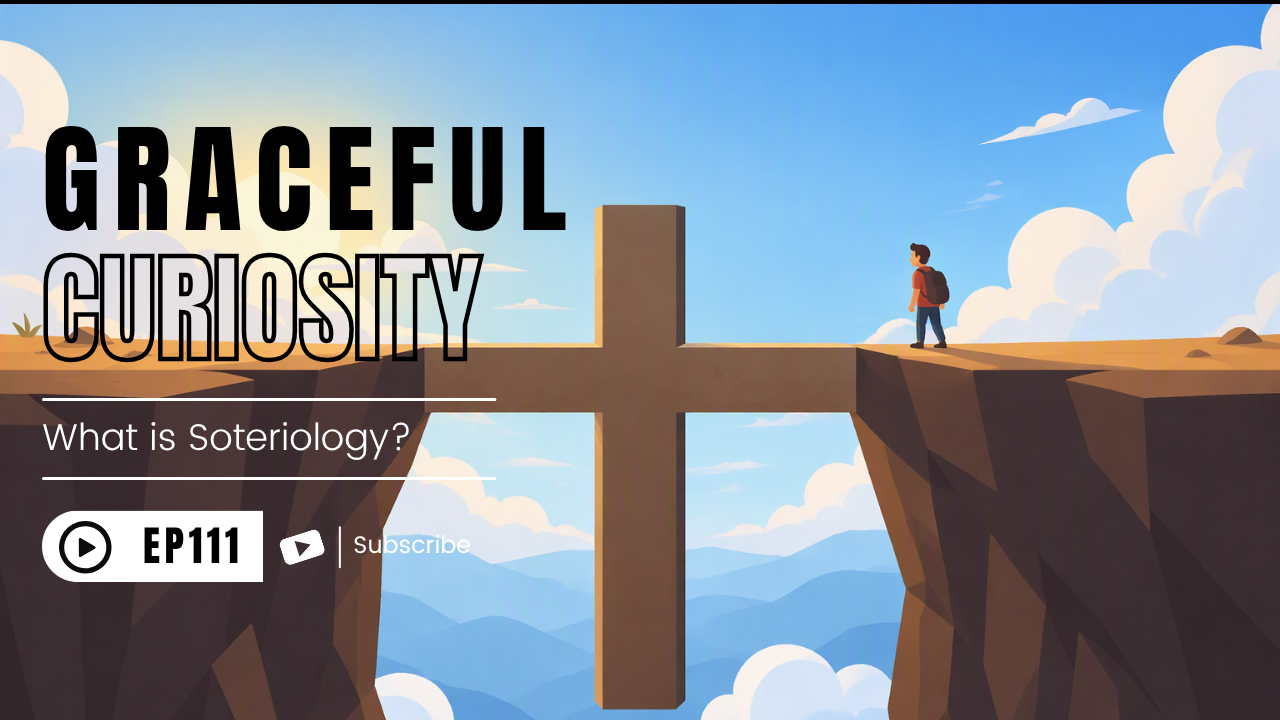
Episode 111 | From Election to Glorification: The Christian Journey of Salvation
Speaker: Henry Covert Series: What is Theology? Topic: Theology
What Is Salvation? Understanding the Order of Salvation
Every Christian has likely asked questions like:
- How does salvation work?
- What happens when someone becomes a Christian?
- What role does God play in salvation?
- What role do we play?
- Can we know we are saved?
These questions fall under a branch of theology known as soteriology, the study of salvation.
In this episode of Graceful Curiosity, Henry and Michael walk through the historic Christian understanding of salvation often referred to as the Order of Salvation or Ordo Salutis. While theology cannot fully explain every mystery of God's work, these categories help us understand what Scripture teaches about how God brings sinners into relationship with Himself.
Salvation Is God's Work
Before examining the individual parts of salvation, it is important to recognize a foundational truth: Salvation begins with God and ends with God. Human beings often want to know the mechanics. We want clear steps, formulas, and explanations. Scripture certainly gives us important categories, but it consistently presents salvation as the gracious work of God rather than the achievement of humanity. Understanding this truth shapes everything else.
Election: God's Gracious Choice
The first step traditionally discussed is election. Election refers to God's choosing of those He will save according to His divine purposes. This doctrine can be difficult because it raises questions about free will, fairness, and God's sovereignty. Scripture, however, presents both realities simultaneously:
- God sovereignly chooses.
- Human beings genuinely respond.
While Christians have debated how those truths fit together, Scripture affirms both. Sometimes theology requires humility in the face of mystery.
Calling and Regeneration
After election comes God's work of drawing people to Himself. Calling refers to God's invitation and drawing power through the gospel and the work of the Holy Spirit. Regeneration refers to spiritual rebirth, often described as receiving a new heart or becoming spiritually alive. Theological traditions differ on exactly how these relate chronologically. Some place regeneration before conversion, while others emphasize the human response to God's call. Regardless of the order, both are works of God's grace. No one saves themselves.
Conversion: Repentance and Faith
Conversion is often the aspect of salvation people most clearly recognize. This is the moment when someone places their trust in Christ and turns away from sin. Biblically, conversion includes two essential components:
Repentance
Repentance means turning away from sin and self-rule. It involves recognizing that God's way is better than our own.
Faith
Faith means trusting in Jesus Christ as Savior and Lord. It is more than intellectual agreement. It is a personal reliance upon Christ and submission to His authority. These two elements belong together. True faith involves repentance. True repentance leads to faith.
Justification: Declared Righteous Before God
One of Christianity's most distinctive teachings is justification. Justification is God's declaration that a sinner is righteous because of Christ. This does not mean Christians become instantly perfect. Instead, it means that Christ's righteousness is credited to believers. When God looks upon those who trust in Christ, He sees the righteousness of His Son. This truth stands at the heart of the gospel and separates Christianity from every system that teaches people must earn God's favor through their own efforts.
Adoption: Becoming Children of God
One of the most beautiful doctrines of salvation is adoption. Through Christ, believers are welcomed into God's family. They are no longer spiritual outsiders.
They become:
- Sons and daughters of God
- Members of God's household
- Heirs with Christ
- Recipients of God's fatherly love
For many Christians, adoption provides some of the deepest comfort found in Scripture. Salvation is not merely a legal transaction. It is an invitation into relationship.
Sanctification: Growing Into Christlikeness
After conversion begins a lifelong process known as sanctification. Sanctification is God's ongoing work of making believers more like Jesus. Unlike justification, which occurs immediately, sanctification continues throughout the entire Christian life.
The Holy Spirit works through:
- Prayer
- Scripture
- Worship
- Fellowship
- Service
- Repentance
- Christian community
to shape believers into the image of Christ.
One powerful picture is that of a silversmith refining silver by removing impurities until he can see his reflection in it. Similarly, God continues refining His people until they increasingly reflect Christ.
Glorification: Eternity
The final stage of salvation is glorification. Glorification occurs when believers are finally freed from the presence of sin and receive resurrected, perfected bodies like Christ's resurrection body. This is the fulfillment of God's redemptive plan. It is the realization of all Christian hope.
In glorification:
- Sin is gone.
- Death is defeated.
- Suffering ends.
- God's people dwell with Him forever.
This is the future toward which every believer is moving.
The Question of Perseverance
One of the most debated issues in soteriology is perseverance. Can a Christian lose their salvation? Different Christian traditions answer this question differently. Some emphasize God's sovereign preservation of believers. Others emphasize humanity's responsibility to remain faithful. At the heart of the conversation lies an attempt to understand two biblical truths:
- God's sovereignty
- Human responsibility
While Christians disagree on certain details, all agree that believers must continue trusting in Christ and pursuing Him throughout their lives.
Understanding the Atonement
Another major topic in soteriology is the atonement. The atonement answers the question: How does Christ's death save sinners? Several theological models have emerged throughout church history, including:
Penal Substitution
Jesus bears the penalty for sin in our place.
Christus Victor
Jesus defeats sin, death, and Satan through His victory on the cross.
Moral Example
Jesus demonstrates God's love and calls believers to follow His example of sacrificial living. While Christians debate certain aspects of these views, they agree on the central truth: Jesus Christ's death and resurrection make salvation possible.
Salvation from Genesis to Revelation
One of the most beautiful aspects of Scripture is that salvation is not merely a New Testament idea. From Genesis onward, God provides a way for sinners to be restored. The themes of sacrifice, redemption, covenant, and grace appear throughout Scripture:
- The covering of Adam and Eve
- Abraham and Isaac
- The Passover lamb
- The sacrificial system
- The prophets' promises
- The ministry of Jesus
- The cross and resurrection
The entire biblical story ultimately points to Christ.
Living in Light of Salvation
For most Christians, the most practical part of soteriology is sanctification. This is where theology moves from abstract concepts into everyday life. Believers participate in God's work by:
- Reading Scripture
- Praying regularly
- Worshiping faithfully
- Serving others
- Participating in Christian community
- Pursuing holiness
Spiritual growth does not happen in isolation. God shapes believers through relationships, fellowship, accountability, and life together within the Church.
Final Thoughts
The Order of Salvation gives Christians a framework for understanding how God works in the lives of His people. From election to glorification, every stage points to the same reality:
Salvation is God's gracious work from beginning to end.
While theologians continue to discuss the finer details, the central message remains unchanged:
- God loves sinners.
- Christ died and rose again for their salvation.
- The Holy Spirit transforms lives.
- And one day, God's people will be fully restored and dwell in His presence forever.
That is the hope at the heart of Christian soteriology.