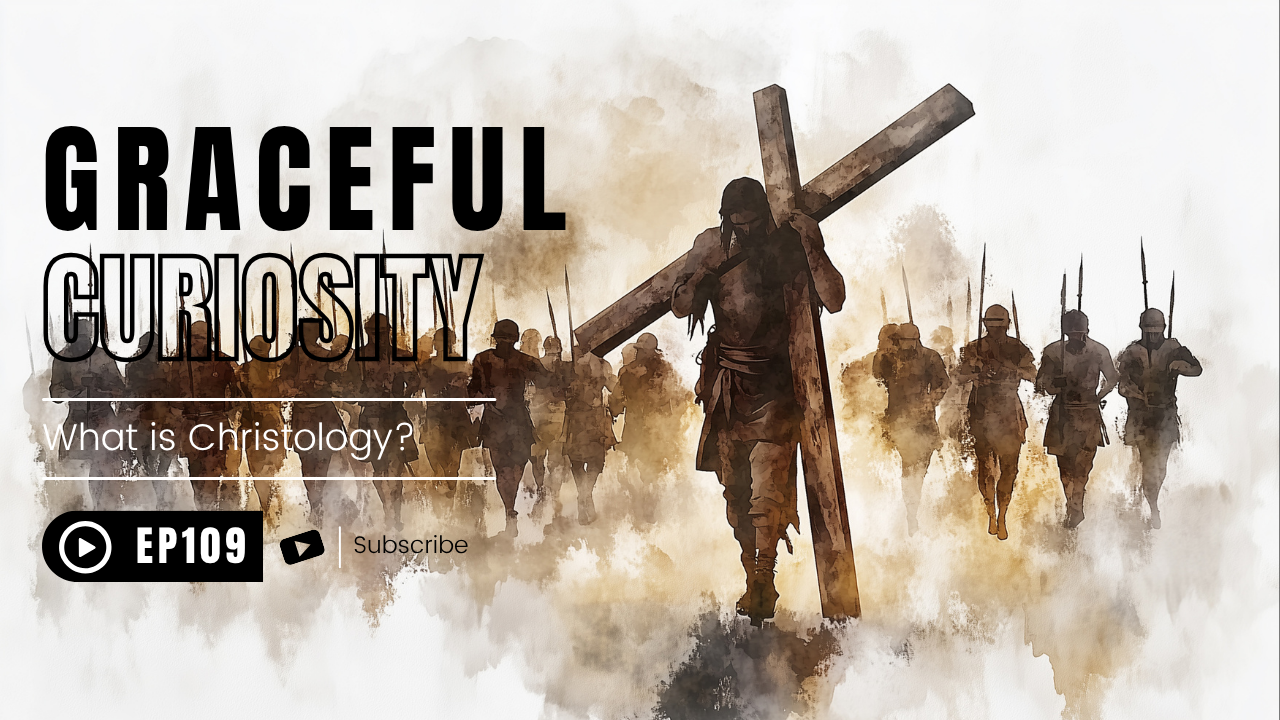
Episode 109 | What is Christology, and why is it so important to our faith?
Speaker: Henry Covert Series: What is Theology? Topic: Theology
Christology 101: Who Is Jesus and Why Does It Matter?
Graceful Curiosity Theology Series
In this episode of Graceful Curiosity, we continued our journey through systematic theology by exploring Christology, the branch of theology that focuses on the person and work of Jesus Christ. After discussing Theology Proper (the study of God the Father) in our previous episode, it was only natural to move to the second person of the Trinity and ask some of Christianity's most important questions:
Who is Jesus?
Is He God, man, or both?
What did He accomplish?
What is He doing now?
Understanding Christology is not simply an academic exercise. It lies at the very heart of the Christian faith.
What Is Christology?
At its simplest, Christology is the study of the identity, nature, and work of Jesus Christ. Christology seeks to answer several foundational questions:
- Who is Jesus Christ?
- How can He be fully God and fully man?
- Why did He come into the world?
- What did His life, death, resurrection, and ascension accomplish?
- What role does He continue to play today?
The answers to these questions shape everything Christians believe about salvation, worship, and our relationship with God.
The Incarnation: God Became Man
The central doctrine of Christology is the Incarnation. The Incarnation refers to God the Son taking on human flesh and entering human history as Jesus Christ. Christians believe Jesus is:
- Fully God
- Fully Man
This relationship between Christ's divine and human natures is known as the Hypostatic Union. Jesus did not stop being God when He became human, nor did He merely appear human. Instead, both His divine and human natures exist together in one person without confusion or separation. This truth is essential because Jesus serves as the perfect mediator between God and humanity.
The Deity of Christ
Christology affirms that Jesus is truly God. His divine nature was never diminished by the Incarnation. Throughout His earthly ministry, Jesus displayed divine authority, forgave sins, received worship, and exercised power over creation. The title "Son of God" points to this divine identity.
The Humanity of Christ
At the same time, Jesus is fully human. The title "Son of Man" emphasizes His humanity and His role as the promised Messiah. Jesus experienced the full range of human life:
- Joy and sorrow
- Friendship and community
- Hunger and fatigue
- Grief and suffering
- and more
When Jesus wept at the death of Lazarus, attended weddings, shared meals, and lived within a family, He demonstrated genuine humanity. Because Jesus fully entered the human experience, He is able to represent humanity perfectly before God.
Historical Challenges to Christology
The early church spent centuries defending biblical teaching about Christ against various misunderstandings and heresies. Some of the most notable include:
Arianism
Arianism denied Christ's full divinity, teaching that Jesus was created rather than eternal.
Nestorianism
Nestorianism separated Christ's divine and human natures too sharply, treating them almost as two persons.
Monophysitism
Monophysitism taught that Christ possessed only one nature rather than both a divine and human nature.
Apollinarianism
Apollinarianism claimed Jesus lacked a fully human mind.
Docetism
Docetism taught that Jesus only appeared to be human but did not possess a real human body. The historic Christian position rejects all of these views and maintains that Jesus is fully God and fully man in one person.
Jesus Fulfills Three Offices
One of the fascinating aspects of Christology is seeing how Jesus fulfills the three major offices found throughout Israel's history.
Jesus the Prophet
Prophets spoke God's truth to God's people. Jesus is the ultimate Prophet because He is not merely a messenger of God. He is God speaking to humanity. Scripture even describes Him as the Word made flesh.
Jesus the Priest
Priests served as mediators between God and humanity. Jesus fulfills this role perfectly because He stands between God and humanity as both fully divine and fully human. Unlike the priests of the Old Testament who offered animal sacrifices, Jesus became the sacrifice Himself. He is both Priest and Offering.
Jesus the King
Kings ruled over God's people and exercised authority. Jesus reigns as the true King over creation and the Kingdom of God. His kingship is central to the message that "the Kingdom of God is at hand."
The Work of Christ
Christology also examines what Jesus accomplished.
His Earthly Ministry
Jesus spent roughly three years teaching, discipling, performing miracles, and proclaiming the Kingdom of God. His teachings, such as the Sermon on the Mount, continue to shape Christian life today.
His Perfect Obedience
Throughout His life, Jesus perfectly obeyed the Father. Where humanity consistently falls into disobedience, Christ demonstrated faithful obedience all the way to the cross.
His Miracles and Teaching
From healing lepers and restoring sight to raising the dead, Jesus demonstrated both divine power and compassion. His miracles authenticated His mission and revealed the nature of God's Kingdom.
His Atoning Death
At the cross, Jesus offered Himself as the sacrifice for humanity's sins. The atonement is a deep topic that deserves its own discussion, but Christology recognizes the crucifixion as the central act of His saving work.
His Resurrection
The resurrection vindicated everything Jesus claimed about Himself. By rising from the dead, He conquered sin and death and demonstrated His divine authority.
His Ascension and Present Ministry
After His resurrection, Jesus ascended to heaven and now sits at the right hand of the Father. Today, He continues to serve as our mediator and intercessor.
The Two States of Christ
Historically, theologians have described Christ's work through two states:
The State of Humiliation
This refers to Christ's self-emptying and humble submission.
It includes:
- The Incarnation
- Earthly suffering
- Crucifixion
- Death
- Burial
The word "humiliation" here refers more to humility than embarrassment. God willingly entered human history and suffered on behalf of humanity.
The State of Exaltation
This refers to Christ's glorification following His work on earth.
It includes:
- The Resurrection
- The Ascension
- His position at the Father's right hand
- His future return
These two states highlight the movement from Christ's humble entrance into the world to His glorious reign as King.
The Eternal Humanity of Christ
One often-overlooked aspect of Christology is that the Incarnation was not temporary. Jesus did not discard His humanity after His resurrection and ascension. Even now, He remains:
- Fully God
- Fully Man
- Son of God
- Son of Man
His humanity remains united to His divine nature forever. This truth is significant because it explains why Christ can continue serving as our High Priest and mediator. He remains our representative before the Father. For many Christians, this reality opens a fascinating perspective: the Jesus who walked the roads of Galilee is the same Jesus who reigns today.
Christology in Biblical Theology
When viewed through the lens of biblical theology, Christology traces God's redemptive plan throughout Scripture. The Old Testament points forward to Christ through:
- Messianic prophecies
- The suffering servant imagery
- The Angel of the Lord
- Promises given through the prophets
- Foreshadowing beginning in Genesis 3:15
The New Testament shows these promises fulfilled. The Gospel of Matthew, in particular, regularly connects Old Testament prophecies to events in Jesus' life, demonstrating that He is the promised Messiah.
Christology in Historical Theology
Historical theology studies how the church has understood and defended biblical truths throughout history. Christology plays a major role here because the church spent centuries responding to misunderstandings about Jesus' identity. Creeds, confessions, and catechisms were often written specifically to affirm the biblical teaching that Jesus is fully God and fully man. The Nicene Creed remains one of the most important examples of the church's commitment to preserving orthodox Christology.
Why Christology Matters Today
Christology is not merely theoretical. It has profound practical implications. Because Jesus is our mediator, Christians can confidently approach God through Him. He understands human weakness because He experienced human life. He can represent humanity because He became human. He can save because He is God. The doctrine of Christ's intercession reminds believers that Jesus is actively present and working on their behalf even now. That means Christology shapes how we pray, worship, trust, and live.
A Study Recommendation: Hebrews
If you're interested in diving deeper into Christology, the Book of Hebrews is one of the best places to start.
Hebrews presents Jesus as:
- The greater Prophet
- The ultimate High Priest
- The perfect sacrifice
- The fulfillment of God's promises
More than perhaps any other New Testament book, Hebrews helps readers understand who Jesus is and why He stands at the center of God's plan for redemption.
Final Thoughts
Christology seeks to answer one of the most important questions in all theology: Who is Jesus Christ? By exploring His incarnation, offices, work, and eternal state, we gain a richer understanding of the One at the center of the Christian faith. Jesus is not merely a teacher, prophet, or moral example. He is the God-Man, the perfect mediator, the risen King, and the eternal High Priest who continues to intercede for His people. And that truth changes everything.
Next week in our systematic theology series, we'll continue our study of the Trinity by exploring Pneumatology, the doctrine of the Holy Spirit.